Asian Academy of Arts Hosts Art and Making Forum at the British Museum
London, England, March 8, 2026—Steven Zhao, Canada & World Report — The Asian Academy of Arts organised the invited academic forum “Art and Making: Material Culture, Craft and Emerging Practices” on March 4, 2026, at the British Museum BP Lecture Theatre and East Foyer in London.
Fang Ting Ting, Dean of the Asian Academy of Arts, said in an interview with Canada & World Report in London on March 11 that the forum was intended to create a platform for dialogue between scholars, artists and curators from different cultural backgrounds. She noted that bringing discussions of craft, material culture and contemporary artistic practice into a museum setting such as the British Museum BP Lecture Theatre helps open new perspectives on how making can function as a form of knowledge and cultural exchange.
Organised by the Asian Academy of Arts, the forum brought together museum curators, scholars, artists and cultural researchers to explore how material culture, craft traditions and cross-cultural dialogue influence emerging artistic practices within the contemporary global art landscape.
The Asian Academy of Arts is an international platform dedicated to promoting dialogue between contemporary art practice, craft traditions and cross-cultural research.
Discussions centred on three key themes—material, craft and cross-cultural translation—with particular attention given to emerging artists and researchers investigating the relationships between materials, symbols and identity.
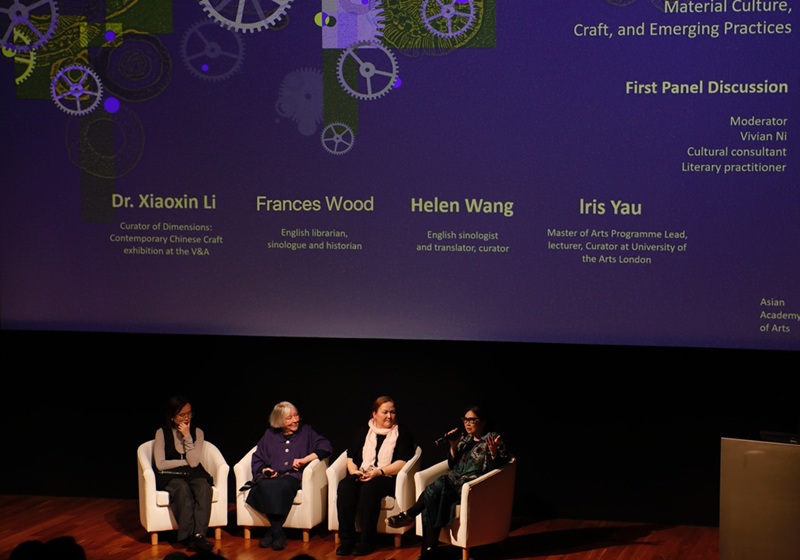
First Panel Discussion at the forum “Art and Making: Material Culture, Craft and Emerging Practices.”
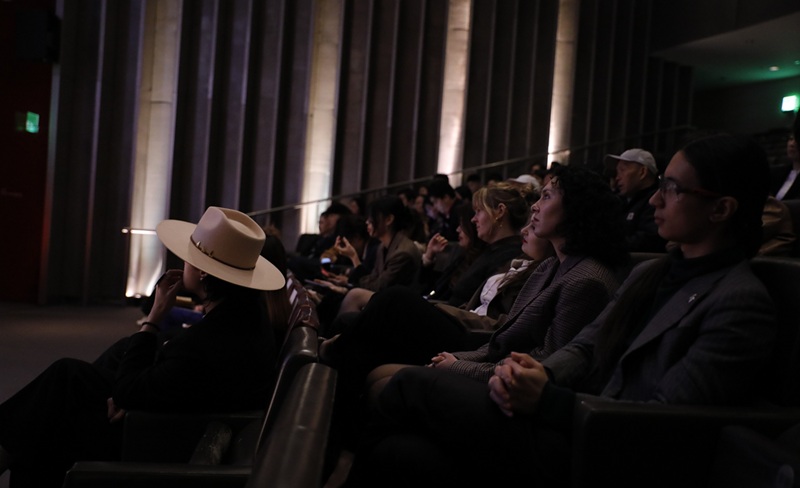
Audience members attending the academic forum “Art and Making: Material Culture, Craft and Emerging Practices.”
Opening Remarks
In her opening remarks, Fang Ting Ting, Dean of the Asian Academy of Arts, noted that the event was not intended simply to present differences between artistic practices, nor to categorise art, craft and design into separate disciplines.
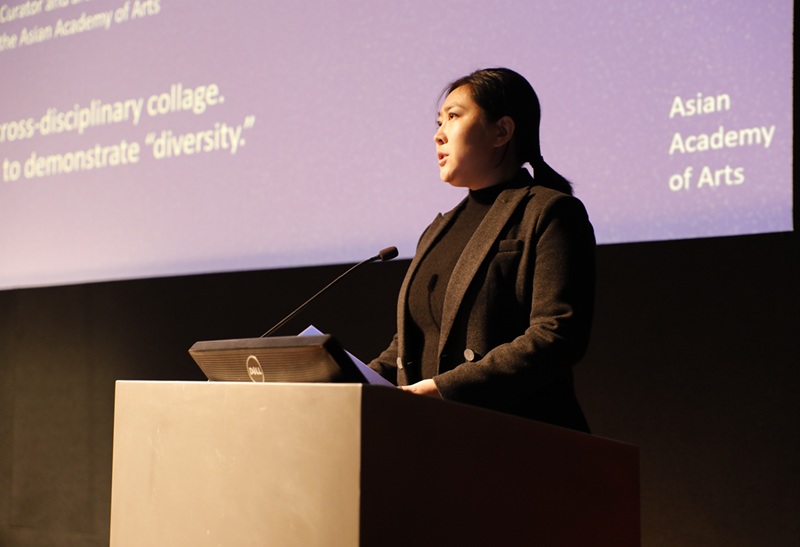
Fang Ting Ting, Dean of the Asian Academy of Arts, delivering opening remarks.
Instead, the forum was organised around a more fundamental question: can “making” be understood as a form of knowledge production within contemporary art?
Over recent decades, Fang observed, contemporary art discourse has increasingly emphasised concepts and theoretical texts, while materials and processes of making have often been treated as mere technical execution. Yet when artists interact with materials—responding to their resistance, feedback and transformation—thinking itself may emerge through that process.
If practice is itself a mode of thinking, Fang suggested, then the position of making within the contemporary art system may need to be reconsidered.
She further noted that discussing this question within the context of a museum—an institution fundamentally centred on objects—introduces a particular intellectual tension. Objects are not merely historical remnants; they carry knowledge, memory and structures of power.
Fang therefore proposed three guiding questions that shaped the discussions throughout the forum:
• Does making generate thought?
• Do objects generate meaning?
• Do long-standing hierarchies within the art system shape how different practices are interpreted?
These questions, she emphasised, were not intended to create opposition between disciplines, but to provide a clearer understanding of the structures within which contemporary practices operate.
Roundtable I
Emerging Practices Across Generations
The first roundtable discussion was moderated by Vivian Ni, cultural advisor and founder of West Link Consulting, and brought together speakers from museums, academia and curatorial practice.
Helen Wang — Objects as Sites of Knowledge Production
Former East Asian coin curator at the British Museum, Helen Wang drew on her long curatorial experience to discuss how historical objects can function as sites of knowledge production.
Using examples from numismatic collections and inscriptions, she demonstrated how material artefacts serve not only as historical records but also as primary evidence of cultural encounters.
She also reflected on the evolution of research methods in projects such as the International Dunhuang Project, noting how scholarly access has transformed from microfilm archives to digital photography.
While digitisation has dramatically expanded access to collections worldwide, it also introduces new challenges: as knowledge spreads, the desire to encounter original objects grows, creating ongoing tension between access and conservation.
Frances Wood — The Contemporary Value of Making
British sinologist and historian Frances Wood continued the discussion by reflecting on the contemporary relevance of making.
She emphasised that making has always been central to human activity. Today, however, digital platforms such as YouTube and social media allow unprecedented visibility into the processes through which objects are created.
Wood raised a central question: how do we assign value to things that are made?
In her view, a work succeeds when it fulfils the intention of its maker. Whereas in earlier decades a small number of institutions or publications could define what counted as “new art,” today the abundance of information makes judging quality far more complex.
Iris Yau — Material Histories and Power Structures
Curator and academic Iris Yau, Programme Leader at the University of the Arts London, explored the relationship between materials and global power structures.
She noted that materials carry layered histories of trade, negotiation and cultural exchange, acquiring meaning through global circulation and the hierarchies embedded within cultural systems.
Dr Xiaoxin Li — Methodological Shifts in Contemporary Chinese Craft
Xiaoxin Li, Curator of Chinese Collections at the Victoria and Albert Museum, addressed structural questions concerning how different forms of practice are understood within contemporary art.
Drawing on exhibitions on contemporary Chinese studio craft, Li observed that younger practitioners increasingly focus on material experimentation and global dialogue rather than presenting a fixed notion of cultural identity.
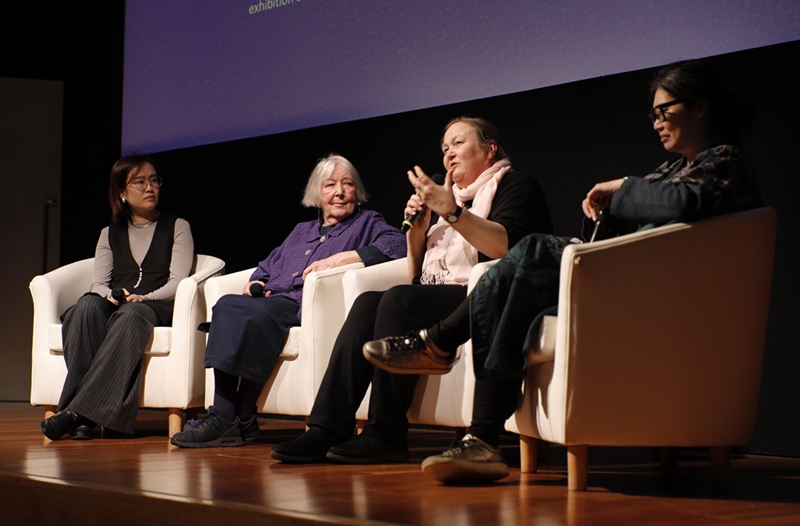
Roundtable I: Emerging Practices Across Generations.
Keynote Lecture
Lu Ying — Jewellery as Cultural Translation
Following an afternoon break, the forum continued with a keynote lecture by jewellery artist and designer Lu Ying.
Lu is the founder of Oriental Naturalism Jewellery and Baoji Jewellery. Her practice integrates French craft traditions with Eastern aesthetic structures through the development of a 1,668°C titanium forging technique, which forms the basis of her “Nouveau Deco” aesthetic framework.
In her lecture, Lu approached jewellery not simply as decoration or craft but as a situated artistic practice.
Because jewellery is worn on the body, she argued, it functions as an intimate cultural language capable of generating meaning through everyday experience.
She summarised:
“Wear, rather than explain. Let the work speak through the body, and allow each viewer to interpret it in their own way. Jewellery can become a form of cultural translation in motion.”
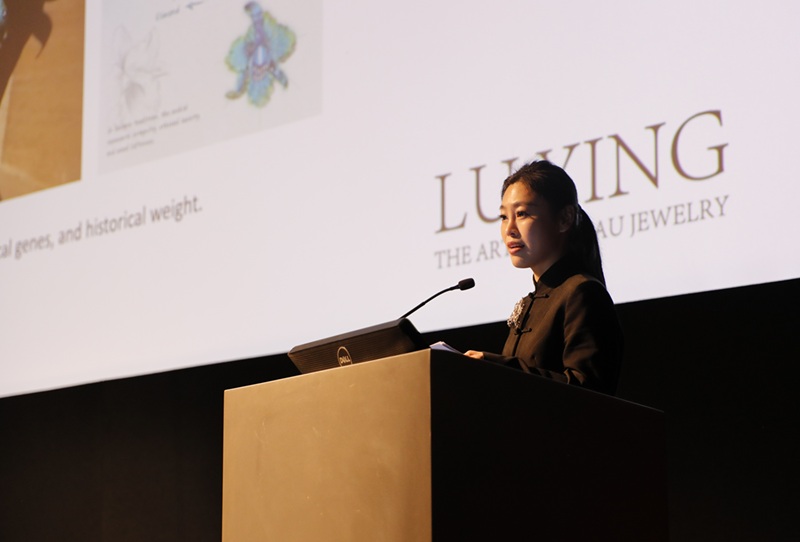
Jewellery artist and designer Lu Ying, keynote speaker at the forum.
Roundtable II
Cross-Cultural Imagination and Emerging Curatorial Positions
Following the keynote lecture, the forum moved into the second roundtable discussion moderated by Vivian Ni.
Speakers including Viv Lawes, Erika Song, and Luyang Zou explored themes ranging from positionality and cross-cultural dialogue to technology, identity and emerging curatorial perspectives.
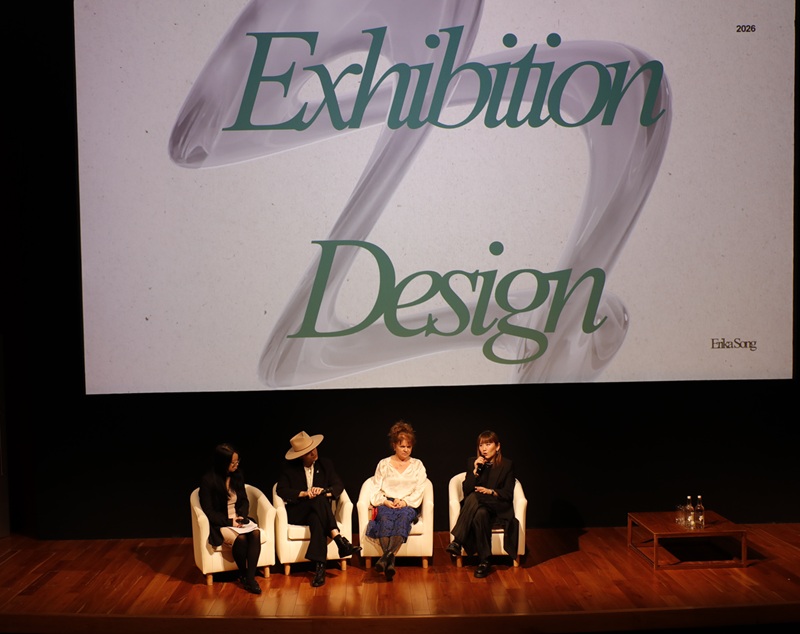
Roundtable II: Cross-Cultural Imagination and Emerging Curatorial Positions.
Event Information
Art and Making: Material Culture, Craft and Emerging Practices
Date: March 4, 2026
Venue: British Museum BP Lecture Theatre & East Foyer
Organiser: Asian Academy of Arts
Chief Curator: Fang Ting Ting
Event Coordination: Wenshaoyue
Executive Director: Yang Jie
On-site Coordination: David Shi
Academic Advisor: Zhao Jun
Production Team: CJcaptain, Hou Yajie, Roland Min, Shan Linhao
Guest Assistants: Wen Xuanhe, Chen Sangyu, Min Yueying, Cai Qingjuan, Cheng Qianyang, Qian Lumin
Poster Design: Liu Jiachen
Online Coordination: He Ziming, Chang Zeqi
Video Production: Bruce Huang
Photography: Fei Ling Peng
Media Contact:
Steven Zhao
Canada & World Report
zhao@canadanewsreport.com
The following international media have reproduced this news story:
Key Media – 5
U.K. Media – 1
Canada Media – 56
100 Mile Free Press
Abbotsford News
Agassiz Harrison Observer
Alberni Valley News
Aldergrove Star
Arrow Lakes News
Ashcroft Cache Creek Journal
Boundary Creek Times
Burns Lake Lakes District News
Caledonia Courier
Campbell River Mirror
Castlegar News
Chemainus Valley Courier
Clearwater Times
Cloverdale Reporter
Coast Mountain News
Comox Valley Record
Cowichan Valley Citizen
Cranbrook Townsman
Creston Valley Advance
Eagle Valley News
Eckville Echo
Goldstream Gazette
Grand Forks Gazette
Haida Gwaii Observer
Hope Standard
Houston Today
Kelowna Capital News
Keremeos Review
Kimberley Bulletin
Lacombe Express
Monday Magazine
North Thompson Star/Journal
Interior News
Vancouver Island Free Daily
Vernon Morning Star
Victoria News
Westerly News
West K News
Williams Lake Tribune
Yukon News
Maple Observer
Vancouver Chronicles
Toronto Daily Report
Ontario Sun
Montreal Breaking
Calgary Observer
Halifax Daily
Edmonton Observer
Ottawa Recorder
Calgary Monitor
Quebec News
Toronto News
Vancouver News
Winnipeg News
U.S.A. Mega Digital Media-141
ChineseWire
The Daily News
Magnolia State Live
The Orange Leader
Port Arthur News
Picayune Item
L’Observateur
The Panolian
Americus Times-Recorder
The Advocate-Messenger
American Press
The Daily Leader
The Oxford Eagle
Bluegrass Live
Claiborne Progress
Elizabethton Star
The Jessamine Journal
The Kenbridge Victoria Dispatch
The Clemmons Courier
Harlan Enterprise
Ironton Tribune
Davie County Enterprise Record
The State Journal
The Charlotte Gazette
The Interior Journal
The Tryon Daily Bulletin
The Winchester Sun
Farmville Herald
Salisbury Post
Cordele Dispatch
Middlesboro News
The Post Searchlight
Washington City Paper
Leesville Leader
The Prentiss Headlight
Beauregard News
Hattiesburg
Boreal Community Media
MB News
Times of San Diego
Chester County Press
WNC Business
Ashland Town News
Franklin Town News
Holliston Town News
Hopedale Town News
Natick Town News
Medway & Millis Town News
Norfolk & Wrentham Town News
Norwood Town News
Riverton Journal
Columbia Business Monthly
Sugar House Journal
Herriman Journal
Holladay Journal
Murray Journal
Millcreek Journal
South Salt Lake Journal
Midvale Journal
Draper Journal
Taylorsville Journal
West Jordan Journal
Sandy Utah News
South Jordan Journal
The City Journals
West Valley City Journal
Cottonwood Heights Journal
The Auburn Sentinel
Chillicothe Voice
Connect Iredell
FACE Magazine
Fayetteville Connect
The Gridley Herald
Jewish Link
My Parish News
RSW Living
The Sacramento Oracle
Taos News
The Territorial Dispatch
TOTI
The Wheatland Sun
Bonita & Estero Magazine
Cape Coral Living
Gulf & Main
Times of the Islands
Milford Free Press
CBS Lake Charles
Racine County Eye
eNews Park Forest
FāVS News
Augusta Business Daily
Idaho Enteprise
Eye on Dunn County
The Pioneer
Baker City Herald
Beaverton Valley Times
The Bulletin
Blue Mountain Eagle
Capital Press
Central Oregonian
Chinook Observer
Columbia County Spotlight
The Daily Astorian
East Oregonian
Estacada News
Forest Grove News-Times
Herald Pioneer
Hermiston Herald
Hillsboro News-Times
La Grande Observer
Lake Oswego Review
The Madras Pioneer
Milwaukie Review
Newberg Graphic
Oregon Capital Insider
Oregon City News
Portland Tribune
Redmond Spokesman
Rogue Valley Times
Sandy Post
Seaside Signal
The Bee
The Outlook
Valley Times
Wallowa County Chieftain
West Linn Tidings
Wilsonville Spokesman
Woodburn Independent
Your Oregon News
The News Courier
The Cullman Times
The Daily Iberian
The Valdosta Daily Times
Dalton Daily Citizen
Moultrie Observer
The Lake Oconee Breeze
Meridian Star
Thomasville Times-Enterprise
St. Claire News-Aegis
The Union-Recorder
Tifton Gazette
USA Digital Local Media –47
Albuquerque Express
Atlanta Leader
Austin News
Baltimore Star
Big News Network
Birmingham News
Boston Star
Buffalo News
Charlotte News
Chicago Chronicle
Cincinnati News
Cleveland Star
Connecticut State News
Dallas Sun
Denver News
Detroit Star
Florida State News
Houston News
Indianapolis News
Kansas City Post
Los Angeles Herald
Louisville News
Memphis Sun
Miami Mirror
Milwaukee News
Minneapolis News
Nashville Herald
New York State News
Oklahoma City News
Orange County Sun
Philadelphia News
Phoenix Herald
Pittsburgh Star
Portland News
Raleigh Times
Salt Lake City Sun
San Diego News
San Francisco Star
San Jose News
Seattle Bulletin
Silicon Valley News
South Carolina State News
St Louis Star
The Las Vegas News
The Orlando News
The Tampa News
Washington DC News
Singapore Media –2
Philippines Media –1