The Renaissance of the Chinese Civilization
Xiaoming Guo 郭晓明
China’s economic and political evolution is guided by Marxist theory and has been implemented by Mao, drawing on his artistic skills as a statesman. The trajectory of China’s rising follows basically Mao’s blueprint.
Many Chinese nationalists wanted industrialization and modernization since the Opium War of 1940. They have sought solutions for China in European theories and practices.
The Self-Strengthening Movement, also known as the Westernization or Western Affairs Movement (1861–1895), was led by Prince Gong, Zeng Guofan, and Li Hongzhang. They want to learn from Prussia, and their idol was Bismarck. The movement failed. The First Sino-Japanese War destroyed all their dream.
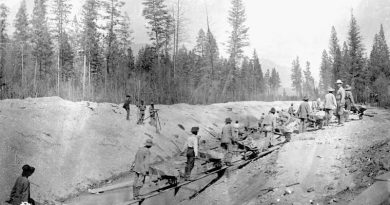
There was also the Hundred Days’ Reform or Wuxu Reform, led by Kang Youwei and Liang Qichao in 1898. They want to learn from Britain and establish a constitutional monarchy. Their reform failed in a hundred days, and many members of the revolution party were prosecuted. Kang and Liang were exiled to Canada.
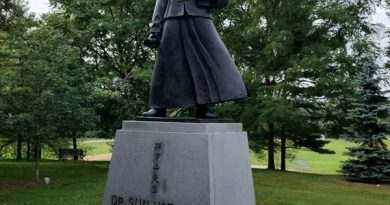
There was also the 1911 Revolution, also known as the Xinhai Revolution, led by Sun Yat-sen, learning the USA. Sun was successful in overthrowing the Qin Dynasty and establishing the Republic of China; the government now resides in the Taiwan province. But that did not help China in industrialization and modernization. The Western powers still dominated the politics and economy of China. China was still invaded time and again by the imperialist powers from foreign countries.
Some today blame China for refusing to learn from Western democracy. They are wrong. The Chinese have had too much bloodshed and sacrifices, learning all forms of democracy from the West. Do you see the failed states in the Middle East after democratic regime changes? Do you see the refugees from countries promoting Western democracy? China had the same experience a century ago.
Then there was the May Fourth Movement in 1919, against imperialism. China was the victim of Western imperialism. The Chinese realized that when foreign powers dominated China’s politics and economy, China could never accomplish industrialization and modernization.
When the Chinese felt hopeless, the October Revolution of Russia in 1917 shed light on China. A group of nationalists established the Communist Party of China in 1921. They were, too, learning from the West, Marxism. Some say that China is too stubborn to learn from the West. They are wrong. What we witness in today’s China is a result of learning from the West. What you see in China is different from the West because learning from the West is like eating beef. Eating beef will not grow the muscles of a cow. Eating beef will still grow human muscles. China learns from the West, but China rises as China.
In 1923, Lenin decided to support China against imperialism. Lenin provided weapons and funding to Sun Yat-sen and the Nationalist Party, the KMT. Lenin helped the KMT establish the Whampoa Military Academy. Lenin believed the KMT should be the leader in the Chinese Revolution because China was a argriculture society and needed a capitalist revolution. The Communist Party of China obeyed the Communist International, supporting the KMT. Moscow trained carders for KMT and CPC alike.
In 1927, the KMT massacred the CPC, a white terror. The Chinese communists, who had learned in Europe or Moscow, took the October Revolution as an example, organized the Guangzhou Uprising and Nanchang Uprising in cities, relying on workers and soldiers. They failed. Mao, instead, organized the Autumn Harvest Uprising in the countryside, relying on peasants. Guess what? Who was more of a Marxist? If the Communist International supported the KMT, thinking that what China needed was a capitalist revolution, then Mao was right according to Marxist theory. If the Chinese Revolution was a proleitarian revolution, then an uprising in cities relying on workers and soldiers should be the correct maneuver. If the Chinese Revolution was a capitalist revolution, as the Communist International categorized, Mao was right in relying on peasants and the bourgeoisie in the revolution. Mao’s uprising survived and established a soviet power in the countryside. Communists were killed in the Guangzhou uprising, and the fleeing troops from the Nanchang Uprising, which had more connections to the Communist International, joined Mao for survival.
The Soviet power reign larger and larger area, under Mao’s leadership. There were 28 and a half Bolsheviks, the Chinese communists trained in Moscow, who took power and marginalized Mao, because they had the authority of the Communist International. It was a downturn for the Chinese Revolution. Under the guidance of the Communist International, the Chinese Soviet Power weakened, and the area and population under the Soviet government shrank. The 28 and a half Bolsheviks ruined the Chinese Revolution. The Chinese Red Army had to abandon the Soviet bases and began the Long March, and was almost annihilated during the Long March. Night after night, the Red Army died on the battlefield.
In Zunyi, a town in Guizhou province, they have to decide what to do next with the exhausted Red army, surrounded by the KMT army, overwhelmingly with airplanes and cannons.
In Zunyi, the Red Army had no communication with the Communist International. The Communist International could not make decisions for the Red Army. The Red Amy remembered that they could grow successfully under Mao’s leadership. Mao returned to the leadership.
In the Yalta conference, Stalin recognized the KMT as the leader of China. He expected the Communist Party of China, like the Communist Party of France, to give up arms, and like other communist parties in Western Europe. Chiang Kai-shek’s son had studied in Moscow. The Soviet Union had signed a treaty with the Republic of China.
Yet, to the surprise of Stalin and Eisenhower, Mao took the mainland and drove Chiang to Taiwan. Mao might have taken Taiwan, too, if it were not for the Seventh Fleet cruising in the Taiwan Strait.
In 1940, Mao wrote an article stipulating that the capitalist revolution in China could only be successful under the leadership of the Communist Party of China.
Mao led the Chinese Revolution, and that was a capitalist revolution too. Mao established the People’s Republic of China, but didn’t call it a communist China. It was, at the beginning, a capitalist China.
In 1947, at the Congress of the Communist Party of China, the party decided to carry out 30 years of capitalist development after the CPC took power in China. In 1949, actually, in 1946, during the civil war, the CPC had begun the land reform, the capitalist revolution, redistributed land to every peasant, turning peasants into the bourgeoisie. Then, in 1950, the Korean War broke out. China was drawn into the Korean War. For the defense, China had to make weapons. To make weapons, China had to have heavy industries. But heavy industry had no market in China. Individual peasant cannont affort to buy farming machines. China had the socialist revolution: the People’s Communes, and the reform of the private enterprises. The state-owned enterprises and the People’s Communes provide the market for China’s heavy industry. For the Korean War, Stalin was willing to help China build heavy industry. Mao would not refuse this opportunity and would use the socialist revolution to accommodate the heavy industry. China was the most backward country in 1949, with steel production and the length of railway far behind India.
In 1956, Nikita Sergeyevich Khrushchev gave a secret speech within the Communist Party of the Soviet Union, which began the De-Stalinization Campaign. Mao criticized Khrushchev as a revisionist in 1961 and broke away from the Soviet Union. Mao considered Khrushchev a traitor to the socialist movement of the world. Mao believed that the Russian Revolution had failed. Mao was correct. The collapse of the USSR in 1991 proved Mao’s judgment. In 1962, India provoked China at the border, and the Soviet Union was behind the scenes. That puzzled Mao more. Why did the USSR want a military attack on China?
In 1966, Mao went back to his hometown, isolated himself from everyone else for twelve days, pondering what China should do to avoid the fate of the USSR. He must consider all possible scenarios of what to do with the Great Proletarian Cultural Revolution to prevent China from failing the socialist revolution. The Great Proletarian Cultural Revolution was a communist revolution, preventing China from falling back into capitalism.
From 1949 to 1979, for thirty years, China carried out three revolutions: The land reform, the capitalist revolution; the Great Leap Forward, and the People’s Communes, the socialist revolution; and the Great Proletarian Cultural Revolution, the communist revolution. That’s not what Mao planned in 1947. China carried out the socialist revolution and communist revolution in response to the US and USSR pressure. It was the international environment that forced Mao to take measures for the survival of Red China. This was the Mao era. The Mao era accomplished the task of standing up as an independent country. The Deng era accomplished the task of getting rich. The Xi era will fulfill the task of making China strong.
The Mao era ended with Nixon’s visit. Mao finally secured a peaceful international environment for China to develop. In 1979, China resumed the normal diplomatic relationship with the US and its allies. China was recognized as a member of the UN and recognized by almost all countries. That’s the fundamental prerequisite for economic growth, industrialization, and modernization. It’s time to come back to the blueprint laid out in 1947, 30 years of the capitalist economy, the Deng era.
In 2012, Xi was in power. The 30 years of the capitalist economy ended, just as Mao had planned in 1947. He began Socialism with Chinese Characteristics. All the capitalist traits tolerated in the Deng Era were not tolerated under Xi. Poverty must be eliminated. Poverty is tolerated in capitalism but not tolerated in socialism. Solidification of social stratification should be prevented. Class formation is allowed in capitalism but not allowed in socialism. Xi banned private schools in China. No one can become an economic-political elite solely because his or her family is rich and can afford special education. China is resilient because it has the most fluid social mobility. The most fluid social mobility brings China the most vibrant economy. You can be a social elite if you are talented and work hard in China. You cannot get into the circle of the social elite just because you are rich. That’s the Chinese Dream. Everyone is equal, rich and poor, to realize their best potential and fulfill their dream based on effort, not on economic status.
China learns from the West, eating beef and growing human muscles. China learns a lot from the West but keeps its own identity. Mao’s thought is Confucianized Marxism. Deng’s theory is Confucianized capitalism. Xi’s Socialism with Chinese Characteristics is the Renaissance of Chinese Civilization, under the leadership of the Communist Party of China, consolidating both Mao’s thought and Deng’s theory. China comes back to the center of the world as it used to be in the last five thousand years. The Chinese Civilization has contributed the most to the progress of Homo Sapiens, and will continue to do so. Because the Chinese Civilization is humanitarian, putting humans at the centre of the universe. China is the civilization of mankind, for the mankind and by the mankind. China is the future of mankind.