“Voices, Amplified: A Manifesto” Concludes in Venice, During the 61st Venice Biennale
The international art exhibition Voices, Amplified: A Manifesto brought together 11 artists from China, the United Kingdom, and the United States in Venice, during the 61st International Art Exhibition of La Biennale di Venezia.
Presented in Venice, Italy, from 15 to 22 August 2026, Voices, Amplified: A Manifesto explored ideas of “voice,” “listening,” and individual expression through painting, moving image, digital media, and other artistic forms. The participating artists brought distinct cultural backgrounds and creative approaches to the exhibition, which comprised two sections: a presentation of physical artworks and a programme of digital moving-image works.
Drawing inspiration from In Minor Keys, the title and curatorial framework of the 61st International Art Exhibition of La Biennale di Venezia, the exhibition turned its attention towards voices that are subtle and persistent, yet not always readily noticed. In the title, “Amplified” does not simply refer to making a voice louder. Rather, it raises a broader set of questions: What can be heard? Who can be heard? And how do different forms of individual expression enter our fields of perception and understanding?
Exhibition Information
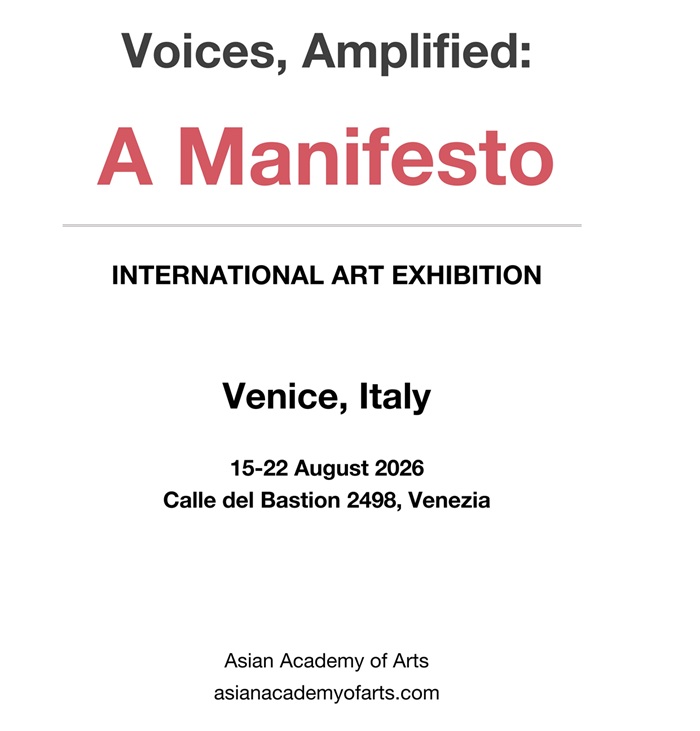
Exhibition: Voices, Amplified: A Manifesto
Dates: 15–22 August 2026
Opening reception: 15 August 2026, 17:00–19:00
Venue: Calle del Bastion 2498, Venice, Italy
Participating artists: Mikhi Dacus, Li Weizheng, Lin Hongnian, Luo Ziran, Song Kaixin, Sun Lijun, Wang Renxiang, Wei Ziying, Xiong Linrui, Zhao Jun, and Zhao Guihu
Curator: Fang Ting Ting
Organised by: Asian Academy of Arts
Curatorial Statement
What can be heard, who can be heard, and how a voice enters public perception are always shaped by cultural, social, and institutional structures. Who has the opportunity to express themselves, whose forms of expression are understood, and who gains entry to exhibitions, institutions, histories, and systems of knowledge are all determined through ongoing processes of negotiation and selection. To amplify a voice within a particular space, therefore, is also to reconsider the conditions under which that voice is organised, viewed, understood, and ultimately heard.
Drawing inspiration from In Minor Keys, the curatorial framework of the 61st International Art Exhibition of La Biennale di Venezia, this exhibition approaches “listening” as a mode of perception. It focuses on diverse forms of expression created by artists with different cultural backgrounds, social experiences, and artistic paths. When attention is directed towards subtle details, experiences that have long existed but have not been fully recognised begin to emerge.
Some artists listen for the vitality contained within materials by tracing changes in matter, nature, and time. Others use the body, language, memory, and identity as sites of artistic exploration, examining how personal experiences are continually constructed and rewritten within social structures. Still others engage with artificial intelligence, algorithms, and digital media, exploring how technological transformation reinterprets reality. Placed together within the same space, these forms of expression create a series of independent yet interconnected modes of “listening.”
Listening always takes place within particular cultural, social, and relational contexts and therefore continually generates new forms of connection. As visitors enter the exhibition, they encounter a series of evolving relationships: between people and artworks, among artworks, across cultures, between technology and the body, and between different lived experiences. Within these encounters, viewing becomes a form of listening, listening becomes a form of understanding, and understanding becomes a continuously evolving relationship.
—Fang Ting Ting, Curator
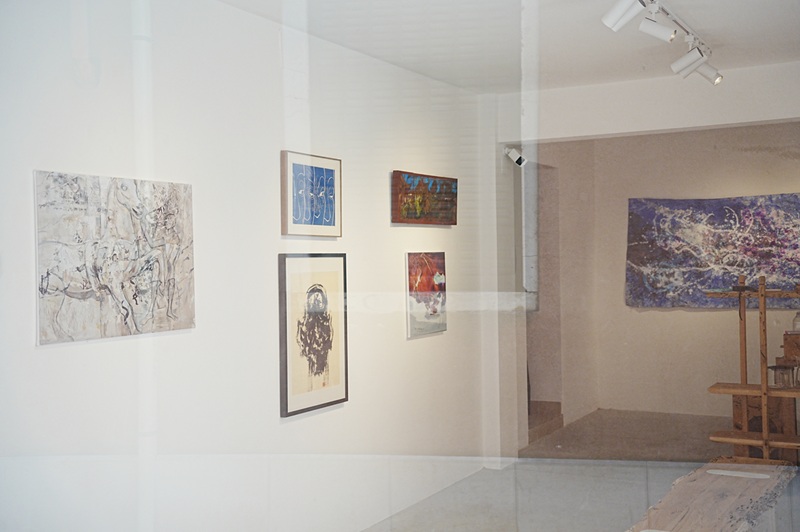
The works presented in the exhibition articulated their perspectives through different media, creating multiple points of dialogue across questions of the individual, society, culture, and technology. Together, they formed a series of voices that remained distinct while becoming intertwined within the exhibition.
The participating works reflected on contemporary society and individual experience from multiple perspectives. Some examined women’s attentiveness to life and existence itself. Others brought together past and present, East and West, seeking new possibilities between inward exploration and outward engagement with reality. Still others translated abstract computation into tangible encounters.
As these different perspectives intersected within the exhibition, individual voices were given the opportunity to become both visible and heard.
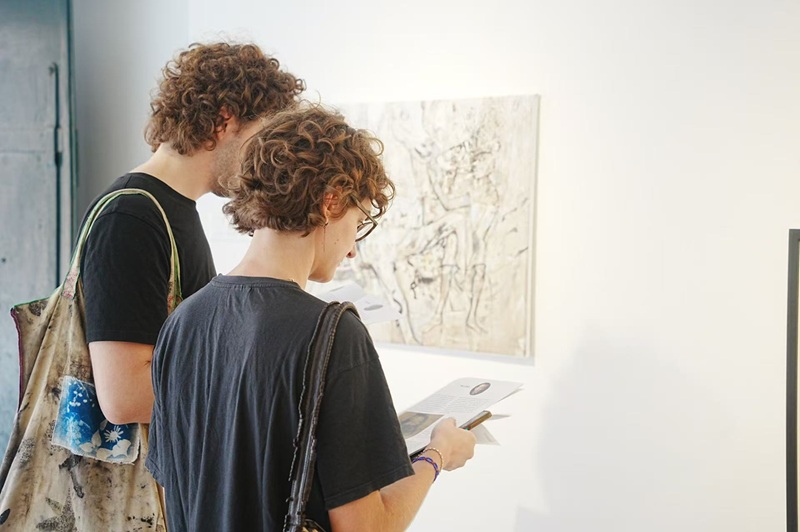
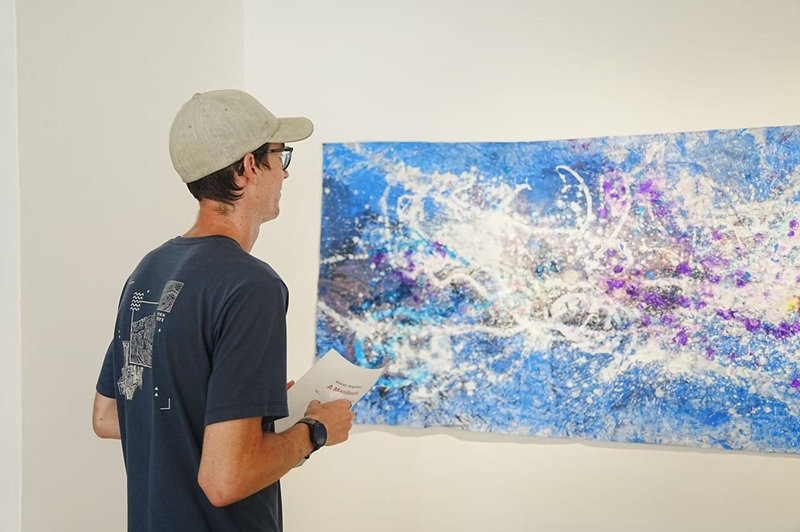
Throughout the exhibition, visitors from different countries and regions entered the space, pausing before the works, looking closely, exchanging ideas, and engaging in conversation. Their varied cultural backgrounds and lived experiences gave rise to different interpretations and responses. Some discussed colour, while others focused on creative approaches. Some were struck by the meanings embedded within particular works, while others lingered because of an immediate visual encounter.
Through these repeated acts of looking and exchange, the exhibition space became more than a site for displaying artworks. It developed into a platform for connections among artists, artworks, and audiences, allowing different voices to encounter one another and generate new responses and conversations.
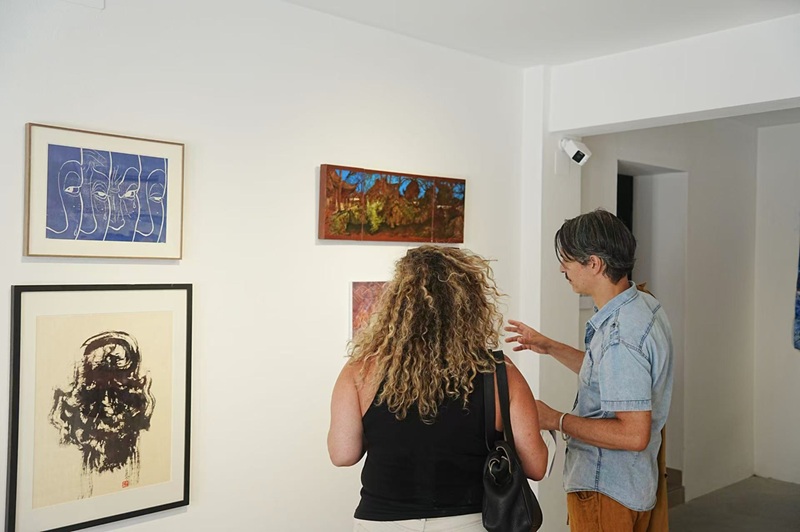
Fang Ting Ting, curator of the exhibition and dean of the Asian Academy of Arts, was also present, engaging with participating artists and visitors. Through these conversations, the exhibition extended beyond its curatorial framework and the expressions embodied in individual works, unfolding through the acts of viewing, discussion, and interpretation that took place among its audiences.
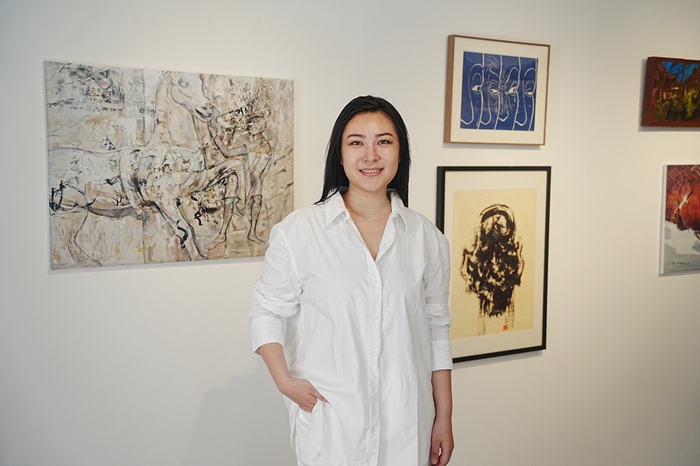
Fang Ting Ting, exhibition curator and dean of the Asian Academy of Arts.
Participating artist Xiong Linrui, who attended the exhibition in Venice, reflected on the experience:
“For me, participating in this exhibition was not only an opportunity to present my work in Venice but also a chance to reconsider my own practice, encounter the work of other artists, and engage with audiences from different cultural backgrounds.
“What surprised me most was that the works in the exhibition did not attempt to respond to In Minor Keys through a single approach. Instead, each retained its own distinctive artistic language while moving between tradition and contemporary practice, personal experience and cultural memory. Bringing these different works together within the same space created unexpected and compelling dialogues.
“One of the most meaningful aspects of the exhibition was seeing my work enter an unfamiliar cultural and perceptual environment. My work, Algorithmic Shadow, explores the relationship between artificial intelligence, the physical world, and human perception. When the work arrived in Venice and encountered audiences from Italy and elsewhere, I began to realise that the same artwork could generate entirely different interpretations within different cultural contexts.
“Conversations with local visitors also prompted me to reconsider the act of looking itself. Audiences do not necessarily understand a work in the way an artist anticipates. They establish relationships with it through their own lived experiences, cultural backgrounds, and even bodily perceptions.
“Because of this, I increasingly feel that an exhibition is not the endpoint of an artwork. When a work leaves the studio and enters a real public space, it truly begins to form relationships with others. Different artistic voices encounter one another, while the ways in which audiences look, respond, and engage in discussion continually add new layers to those voices.
“Participating in this exhibition in Venice during the Biennale has been an extremely valuable experience for me. It has shown me that different cultures, media, and individual experiences do not need to be unified into a single voice. On the contrary, subtle, independent, and distinctive forms of expression can generate new resonances precisely through their encounters with one another.”
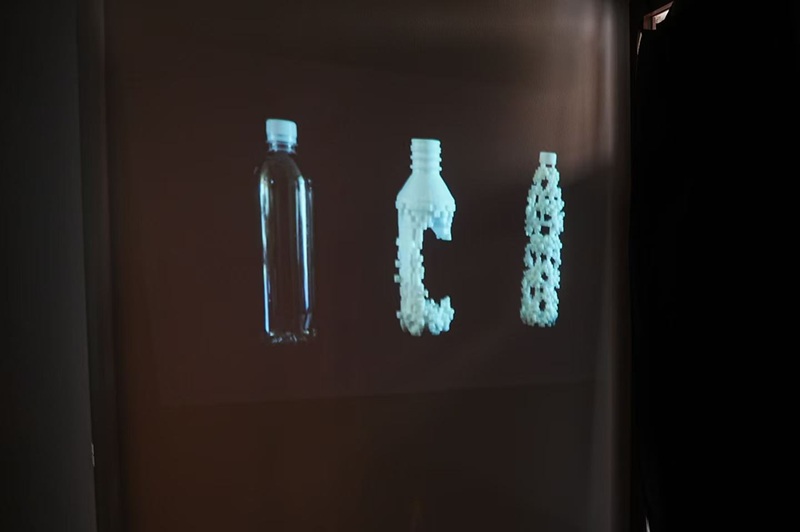
Xiong Linrui and Mikhi Dacus, Algorithmic Shadow, interactive audiovisual installation, 2026.
Voices, Amplified: A Manifesto presented the independent artistic practices of 11 artists while creating a space in Venice where different cultures, media, and experiences could encounter one another.
Rather than seeking a single, unified voice, the exhibition allowed differences to coexist, creating opportunities for subtle yet persistent forms of expression to be seen, heard, and understood. Through successive encounters between artworks and audiences, “voice” extended beyond individual expression and became part of an evolving process of communication and connection among people.
Media contact
Steven Zhao
Canada & World Report
zhao@canadanewsreport.com
The following international media have reproduced this news story:
Key Media –1
Canada Media – 5
Pictou Advocate(1893)
The Chronicle-Journal(1899)
Kelowna Daily Courier(1904)
U.K. Media – 4
Australia Media- 1
Ireland Media – 1
North Macedonia Media – 1
Vanuatu Media – 1
Trinidad and Tobago Media – 1
The Bahamas Media – 2
Argentina Media- 1
India Media- 1
Italy Media – 1
Guam Media(U.S.A)- 1
Virgin Islands (U.S.A.)- 1
Virgin Islands Daily News(1930)
U.S.A. Mega Digital Media-108
Albuquerque Express
Atlanta Leader
Austin News
Baltimore Star
Big News Network
Birmingham News
Boston Star
Buffalo News
Charlotte News
Chicago Chronicle
Cincinnati News
Cleveland Star
Connecticut State News
Dallas Sun
Denver News
Detroit Star
Florida State News
Houston News
Indianapolis News
Kansas City Post
Louisville News
Memphis Sun
Miami Mirror
Milwaukee News
Minneapolis News
Nashville Herald
New York State News
Oklahoma City News
Orange County Sun
Philadelphia News
Phoenix Herald
Pittsburgh Star
Portland News
Raleigh Times
Salt Lake City Sun
San Diego News
San Francisco Star
San Jose News
Seattle Bulletin
Silicon Valley News
South Carolina State News
St Louis Star
The Las Vegas News
The Orlando News
The Tampa News
Washington DC News
The Daily News(1927)
American Press(1895)
The Oxford Eagle(1865)
The State Journal(1900)
The Charlotte Gazette(1873)
Washington City Paper(1981)
The City Journals(1991)
The Union-Recorder(1820)
Dalton Daily Citizen(1847)
The Advocate-Messenger(1865)
Chester County Press(1866)
The Valdosta Daily Times(1867 )
Baker City Herald(1870 )
The Interior Journal(1872)
The Daily Astorian(1873)
The Jessamine Journal(1873)
The Kenbridge Victoria Dispatch(1873)
St. Clair News-Aegis(1873)
The Orange Leader(1875)
East Oregonian(1875)
The Winchester Sun(1878 )
Americus Times-Recorder(1879 )
Idaho Enterprise(1879)
The Gridley Herald(1880 )
Central Oregonian(1881)
The Panolian(1882)
The Daily Leader(1883 )
Wallowa County Chieftain(1884)
Forest Grove News-Times(1886)
Hillsboro News-Times(1886)
Claiborne Progress(1888)
Newberg Graphic(1888)
Woodburn Independent(1888)
Tifton Gazette(1888)
Thomasville Times-Enterprise(1889)
Farmville Herald(1890)
Milwaukie Review(1891)
The News Courier(1891)
The Daily Iberian(1893)
Moultrie Observer(1894)
La Grande Observer(1896)
Port Arthur News(1897)
Blue Mountain Eagle(1898)
Leesville Leader(1898 )
Meridian Star(1898 )
Davie County Enterprise Record(1899 )
Eagle Country
News Radio KOTA
Pierre Country
Z106.3
KBEW
Classic Hits 92.3
KYNT-AM
KCCR-AM
1045 Capital Rock
Current 94.3
The Dam FM
True North Radio Network
WDFX FOX34
WPGX FOX28
WTNZ FOX43