
Weizhen Tang Enters Third Toronto Mayoral Race With Plan to Activate Vacant Housing and Address City Hall’s “Execution Crisis”
TORONTO, Ontario, Canada, Aug. 28, 2026—Steven Zhao, Canada & World Report—Chinese Canadian mayoral candidate Weizhen Tang has been included on the City of Toronto’s certified candidate list following the Aug. 21 close of nominations and is mounting his third campaign for the city’s highest elected office.
According to the City of Toronto’s election schedule, election day is Oct. 26, with advance voting scheduled from Oct. 6 to 11. Tang previously ran for mayor in 2010 and again in the 2023 mayoral by-election. The City’s official 2023 results show that he received 125 votes.
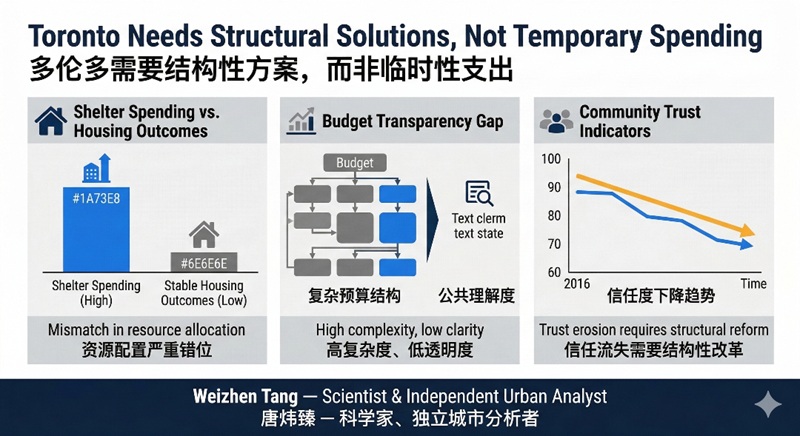
At the centre of Tang’s campaign is his argument that Toronto’s most serious problems are caused not simply by a shortage of resources, but by the city’s inability to convert its existing resources into measurable results.
“Toronto does not have a resource problem; Toronto has an execution problem,” Tang said. “The city has money, housing and talent, but those resources are often trapped between different departments, regulations and competing interests.”
Tang’s campaign platform is organized around five interconnected areas: applying business discipline and capital-efficiency principles to municipal operations; using systems theory and ecological modelling to examine the relationships among housing, transit, public safety and commerce; introducing what he calls “Institutional Literature” as a framework for evaluating government authority and accountability; improving neighbourhood safety while restoring balance between landlords and tenants; and attracting international investment while supporting local small and medium-sized businesses.
Of those proposals, housing and homelessness have emerged as the most detailed components of his campaign.
“Housing is one of Toronto’s core issues—perhaps the most important one,” Tang said in an interview. “Many people believe Toronto simply does not have enough housing, but that is not the whole picture. There are vacant properties, homes under financial distress and buildings left unmanaged or allowed to deteriorate. The question is how to bring those properties back into use.”
Tang proposes that the City help identify suitable vacant homes and unused rooms, support necessary repairs and fire-safety improvements, and connect those spaces with people experiencing homelessness, including recipients of the Ontario Disability Support Program, or ODSP, and Ontario Works, or OW.
Under the proposal, eligible housing assistance could be paid directly to landlords, reducing the risk of missed rent while giving tenants a stable address from which to rebuild their lives.
Ontario’s existing OW and ODSP policies already allow direct payments to landlords or other third parties under certain circumstances. Tang wants the system to become more reliable and better coordinated among the City, landlords, social-service agencies and tenants.
He argues that such a model could create more stable rental income for participating property owners, prevent vacant buildings from deteriorating, return distressed properties to productive use and provide permanent addresses for people who otherwise remain dependent on shelters, hotels or other temporary accommodations.
Toronto’s emergency shelter system continues to operate under heavy pressure. City data for Aug. 26 showed that 7,601 people were being accommodated across the shelter and overnight-service system, with hotel-based programs for families and single adults operating at or close to full capacity.
Tang’s campaign materials compare the cost of a private room—estimated at approximately C$800 a month—with the cost of some emergency accommodation programs, which can reach several hundred dollars per night.
That general cost range is not without precedent. A Toronto Auditor General review found that reported costs for some warming centres ranged from C$321 to C$491 per bed-night, while reported costs for winter respite programs ranged from C$142 to C$311. However, those figures can include 24-hour staffing, meals, security, health care and other support services, making them different from the cost of renting a private room. Tang’s projected savings would therefore require consistent accounting standards and real-world testing before a direct comparison could be made.
Tang said his proposal is not intended to eliminate fire, building or basic habitability standards. Instead, he believes the City should do more than issue orders and fines after problems are discovered.
“A smoke alarm costs about C$20,” he said. “The City could purchase them in bulk and help install them. When a basic safety problem is identified, the first response should not always be punishment. The first question should be how to solve it quickly and affordably.”
Tang views housing as a three-way relationship among landlords, tenants and municipal government. In his assessment, the City should not limit itself to acting as a regulator, adjudicator or enforcement authority.
Individual landlords may have available rooms but limited financial capacity to complete repairs or manage tenants who need additional support. Tenants may have an urgent need for housing but lack sufficient income, credit history or access to support services. The City, by contrast, controls public funding, housing policy, social-service programs, fire-safety resources and interdepartmental coordination.
Tang therefore argues that the City has both the resources and the room to intervene before a housing arrangement fails. It could help properties complete necessary repairs, establish more dependable rent-payment systems, connect tenants with health, employment and social services, and clarify the responsibilities of landlords, occupants and government agencies.
Under his approach, landlords would not be expected to shoulder the full burden of providing housing and social support, while tenants would not be excluded from the rental market solely because of poverty, disability, poor credit or a previous period of homelessness.
Toronto has operated a citywide regulatory framework for multi-tenant houses, commonly known as rooming houses, since March 31, 2024. Operators are required to obtain licences, and converting a property to multi-tenant use may require a building permit. Properties with more than four tenants must also submit a fire-safety plan.
The City has also established a Multi-Tenant Houses Renovation and Repair Program to help eligible properties complete work required for licensing and compliance.
Tang’s proposal would build on parts of that framework but would more directly connect privately owned vacant rooms with homelessness placement, direct payment of social-assistance housing benefits and employment or social-service support.
Its implementation would depend on more than the existence of vacant rooms. It would also have to address provincial income-support policies, Toronto’s multi-tenant housing regulations, building and fire codes, insurance, tenant protections, rent levels, support services and oversight of public funds.
Tang said stable housing should not be treated as a reward provided only after every other problem has been resolved. Instead, he sees it as the starting point for addressing unemployment, addiction, mental-health challenges and social isolation.
“When people do not have a fixed address, it becomes much harder to find work, receive treatment or rebuild a normal life,” he said. “Solving housing problems is not only about giving someone a bed. It can also reduce pressure on public safety, health care and social services.”
Tang’s housing philosophy is also reflected in the experiences of three people who have had direct housing-related contact with him. Together with Tang, the four interviewees described both his approach and their views on how Toronto should respond to homelessness.
Kristine, who was born in Toronto, said she experienced a brief period of homelessness after the sheriff arrived at a home where she was staying and required the occupants to leave. She said she was caught completely unprepared.
It was late November 2025, at the beginning of winter, and Kristine was caring for a disabled dog with cerebellar hypoplasia, sometimes known as “shaky dog syndrome.”
Kristine said a mutual friend who had also experienced homelessness introduced her to Tang. Within approximately one week, she said, Tang had helped her find a place to live, complete her lease documents and travel to appointments needed to finish the paperwork.
“He saved me and my disabled dog,” Kristine said. “He saved my little family. We would never have made it through the winter without him, and I probably would have had to give her up.”
She described Tang as consistently positive and focused on practical solutions.
“He always has a smile on his face,” she said. “Even if he is not smiling, you can tell that he is focused on finding a solution or figuring out what to do next. He actually cares. He was doing this work long before the campaign.”
Kristine also said Toronto’s mayor and City Council should create more employment opportunities for people with lived experience of homelessness, particularly in outreach services.
“They know the community best because they live these problems every day,” she said. “Hiring them to help other people experiencing homelessness would create work and make the services more responsive to what people actually need.”
She rejected the tendency to portray people who are homeless or experiencing addiction as inherently dangerous.
“The majority are not bad people,” she said. “They need help. They need someone to listen to them and not let their ideas disappear as soon as the meeting is over.”
Jason, another interviewee, described Tang as his current landlord and said he had known him for more than a year.
“He is a really good guy and is always willing to help,” Jason said. “Whether someone needs a ride or has a small problem to sort out, he looks out for the tenants. Living here is peaceful. I could not ask for more.”
Thomas said he lost his housing during a legal dispute and has experienced homelessness for four years.
“Mr. Tang has a very big heart,” Thomas said. “I am grateful to him for treating everyone with kindness, respect and equality.”
The accounts provided by Kristine, Jason and Thomas are personal experiences and individual assessments. They do not replace a systematic evaluation of the cost, legal requirements and long-term effectiveness of a municipal housing program. They do, however, illustrate an important principle behind Tang’s campaign: people should not be screened out of housing solely because of their credit history, previous housing instability or social labels.
Tang links stable housing with public safety, but said that does not mean people experiencing homelessness should be equated with criminals. His argument is that prolonged homelessness can leave people more vulnerable to addiction, illness, exploitation and illegal activity, creating broader consequences for the entire community.
“Social stability begins at the bottom,” he said. “When people have nowhere to sleep, nothing to eat and no path forward, society as a whole bears the consequences. Housing is not an isolated issue. It is connected to public safety, health, employment and human dignity.”
Beyond housing, Tang proposes clearer performance measures for municipal programs, less duplication among City departments and a systems-based approach that treats Toronto as an interconnected urban ecosystem.
His platform also calls for greater administrative transparency, stronger protection of procedural and Charter rights, faster resolution of landlord-tenant disputes, support for small businesses and deeper engagement with Toronto’s multicultural and international business communities.
According to the biography provided by his campaign, Tang graduated from China’s Central South University of Forestry and Technology in 1982 and later served as an assistant professor of microbiology. He conducted research as a visiting scholar at The Ohio State University beginning in 1987.
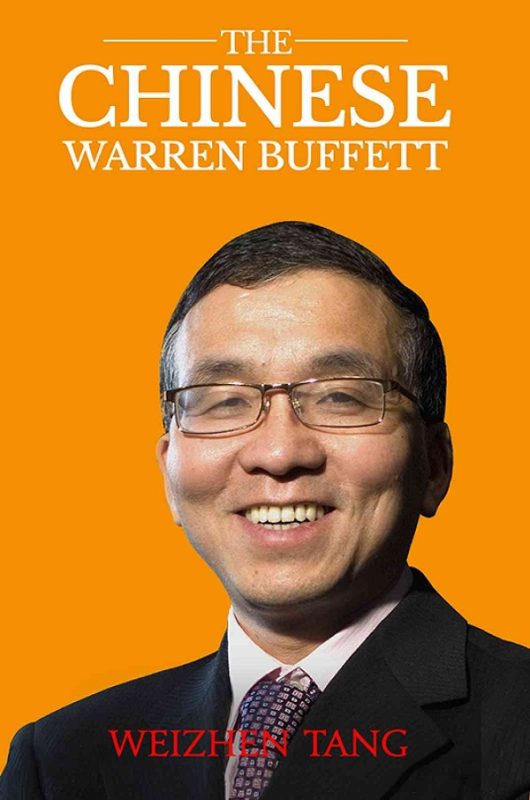
After moving to Canada, Tang earned a master’s degree in biology from the University of Waterloo in 1992. He later worked in human genetic-disease research at Toronto General Hospital and the Hospital for Sick Children Research Institute before entering the financial sector. He is the author of the Chinese-language book My Buffett Path to Wealth and the English-language book Chinese Buffett.
From a policy perspective, Tang’s housing proposal still leaves major questions to be answered: which properties would qualify, who would inspect and repair them, how rents and subsidies would be determined, who would be responsible when there are missed payments or safety problems, how tenants would receive health and social services, and what safeguards would protect tenants, property owners and public money.
Any municipal program would also require coordination with the Ontario government because OW, ODSP, residential tenancy law, building standards and parts of the social-assistance system fall partly or primarily under provincial jurisdiction.
Tang nevertheless argues that the complexity of the problem should not become an excuse for inaction.
“Too many people talk about problems without doing anything practical,” he said. “What I want to do is use the simplest possible methods to solve real problems—help one person find a home, bring one vacant property back into use and then judge the results.”
Media contact:
Steven Zhao
Canada & World Report
zhao@canadanewsreport.com